Services
Ants, wasps and crawling insects.
The trail on your counter is not the problem; the colony is. The nest under your soffit is not just a nest; it is a gap. We treat the source and close the way in.

Ants are a spring and summer job and the mistake most people make is spraying the trail. It kills the ants you can see and tells the colony to split. We identify the species first, because pavement ants, carpenter ants and pharaoh ants need three different approaches, then we bait or treat so the workers carry it home.
Wasps are treated at dusk, when the whole colony is in the nest and slow. The nest comes down once it is quiet, and we screen or seal the gap in the soffit, the vent or the shed wall so next spring's queen does not find a ready-made front door. Honeybees are different: we do not spray them, we call a beekeeper.
Cockroaches need two visits, two to three weeks apart, because the eggs survive the first one. We treat with gel baits and dust in the voids, not a fog over the kitchen, and the second visit is in the price so nobody skips it.
How the job goes.
Identify
10 minutesWhich ant, which wasp, which roach. A photo by text before the visit helps; we bring the glass anyway.
Find the source
20 to 30 minutesThe colony, the nest, the harbourage behind the fridge. Treating the source is the whole job.
Treat
20 to 40 minutesBaits for ants and roaches, a dusk treatment for wasps, a perimeter barrier for spiders and earwigs. The least product that works.
Close the gap
10 to 20 minutesThe soffit gap screened, the weep holes left open but protected, the door sweep checked.
Follow up
Two to three weeksIncluded for cockroaches. For ants and wasps, a call to check, and a return visit under warranty if needed.
What is included
- Species identification before any product
- Treatment aimed at the colony or nest
- Nest removal and the entry gap screened
- Second visit for cockroaches, in the price
- 90-day warranty on interior treatments, 30 days on exterior sprays
What it costs
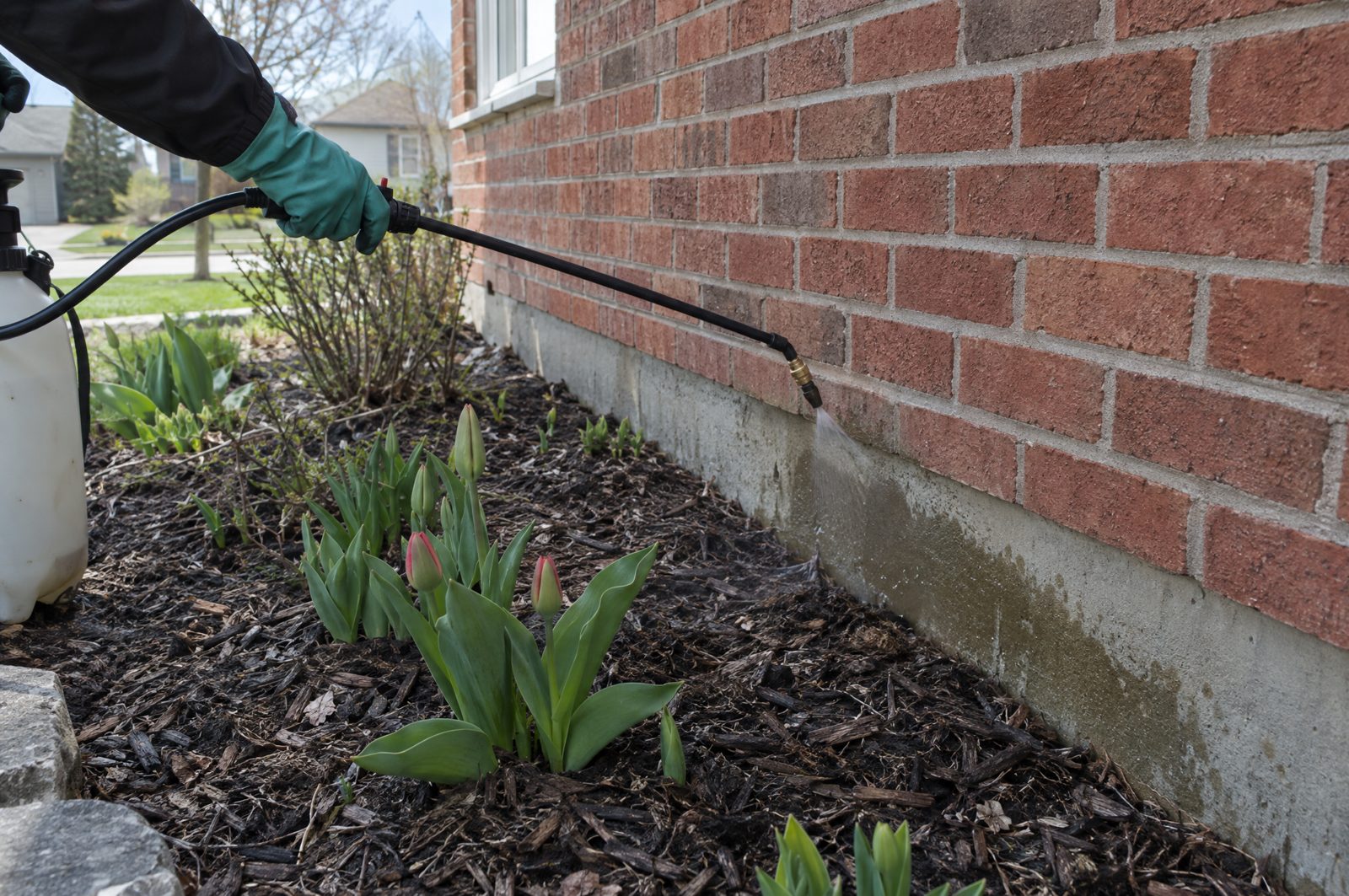
Ants inside: $195 to $275. Carpenter ants: $325 to $425, because they are in the wood and the search is longer. Wasp or hornet nest, reachable from a ladder: $175 to $250; higher than two storeys is quoted. Cockroaches, two visits: $295 to $495. Exterior perimeter barrier for spiders, earwigs and ants: $185, best in May and again in August. Prices plus HST.
Straight answers
Can I just buy the spray from the hardware store?
For a few ants on a windowsill, yes. For a trail that comes back every day, no; the store spray kills the ones you see and splits the colony. If the ants are big and black and you find sawdust, call us, that is carpenter ants and they are in your framing.
Is it safe for kids and pets?
We use gel baits in cracks and stations, dusts inside wall voids and perimeter products that dry within an hour. We tell you the product, the re-entry time and where it went, in writing. Nothing is fogged.
The wasps are in the ground.
Yellowjackets nest in old rodent burrows and under decks. Same approach: dusk, the colony home, the hole treated and then filled. Do not pour gasoline in it, which people still do.
Do you do bed bugs?
We do a chemical treatment for a single room, two visits, $450 to $750. For a whole apartment or anything heavy we refer you to a heat treatment company and tell you honestly that it costs more and works better.
Hearing something in the wall?
Call or text and describe what you have seen. We will tell you what it probably is, what it costs, and when we can be there. No sales visit, no pressure.
 Next05 / 15Seasonal home planThe seasonal home plan.Keep going