Websites / Truck repair
Websites for truck and trailer repair.
Built for the dispatcher with a unit on the shoulder of the 401 and the fleet manager planning next quarter, two customers who search very differently.
The one moment the site is for
A breakdown call is made from a phone, fast, by someone who wants three things: are you near me, can you come now, what is the number. A fleet call is made from a desk, slowly, by someone who wants to know your programs, your coverage and whether you answer at two in the morning.
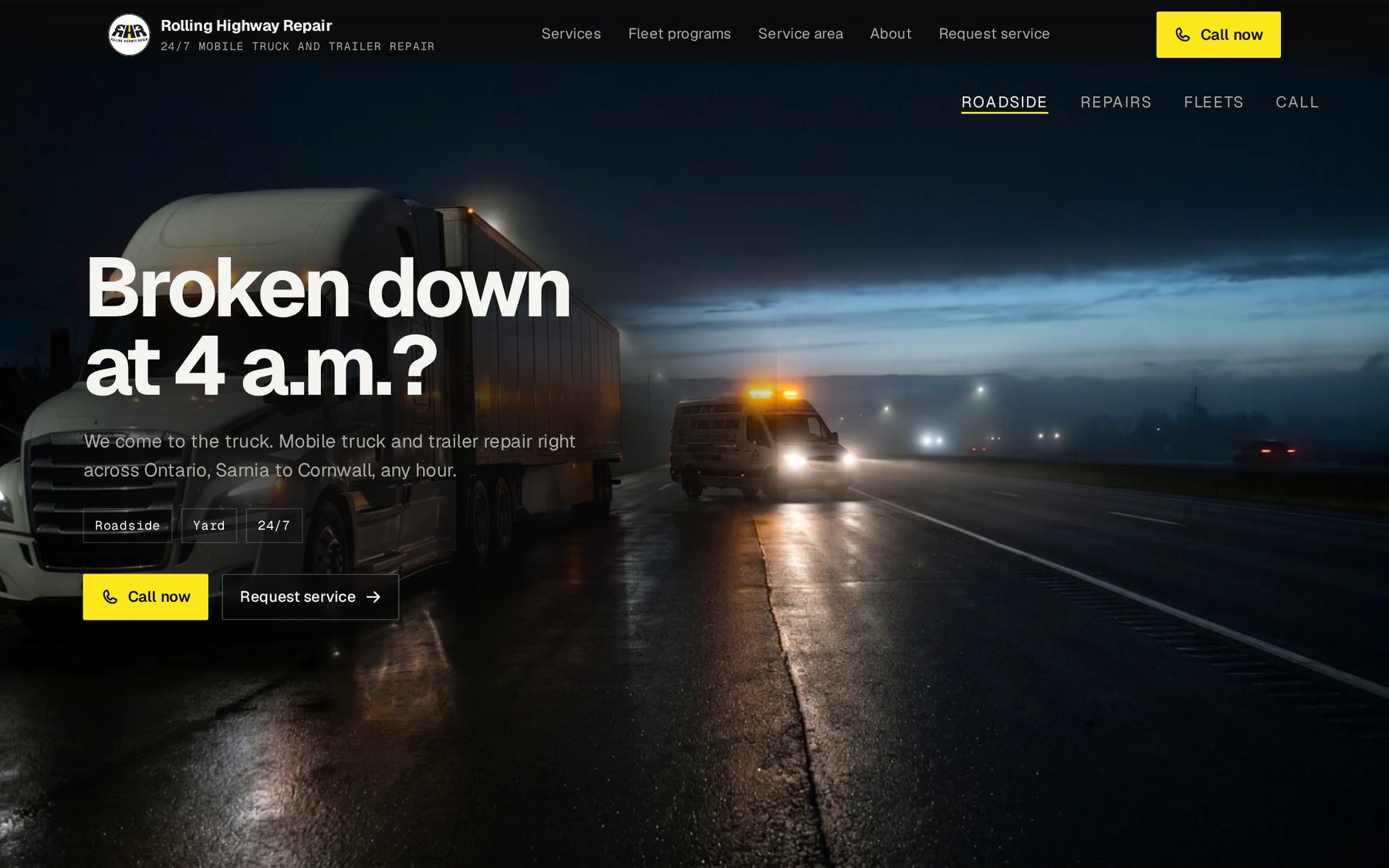
We built this kind of site for our own sister company, Rolling Highway Repair, before we sold it to anyone, so the lessons on this page are ours.
What we build for your trade
- The signature piece is your real van or truck in motion under the scroll, made from a short walk-around video, never a stock vehicle.
- City pages written from freight geography, not a list of suburbs: the intermodal terminals, the 401 and 400 split points, where the ONroutes are. Google can tell the difference and so can a dispatcher.
- Honest coverage: far cities say plainly they are a run from the base and push the scheduled fleet work. A promised arrival time you cannot keep is how a fleet account is lost.
- Every call button opens a chooser when there are two lines, so neither mechanic is the one who never gets the call.
Five pages is the product.
The same five pages every time, each one written for your trade and your customer. If a stranger searches "truck repair Mississauga" tonight, these are the pages that decide whether they call you.
Home
Roadside and shop in one line, the coverage, both numbers if you run two, and the van or the bay as the first thing on screen.
Services
Roadside, brakes, air systems, electrical, trailer, PM: each one written for a driver and for a manager.
Fleet programs
The customer you want more of. Scheduled maintenance, inspections, what the monthly arrangement looks like, who to call.
Service area
One page per city on your corridor, with the real geography: the terminals, the truck stops, the exits, and honest arrival expectations.
Request service
A form that asks for the unit, the location and the problem, and reaches the mechanic, not an inbox.
See one.
Our sister company's live site: the van on the highway as you scroll, eight city pages, fleet programs. A real, live site for a real business, our sister company.
Straight answers
Our calls come from word of mouth at the truck stops. What does a website add?
The dispatcher who has never heard of you. Fleet accounts search, compare and call from a desk, and that customer does not exist without a site that answers their questions.
We run two phones. Which one goes on the site?
Both, with a chooser on every call button, so the customer picks and neither line is buried. If one line is clearly primary, say so and the site follows that.
Can you build the city pages without making things up?
That is the only way we build them. Each city page is written from the real roads, terminals and stops in that city, checked against the map, and it says honestly how far you are from the base.
What did you learn building Rolling Highway Repair?
That the site is judged on a phone at the roadside, so the number has to be above everything; that a fake arrival time loses the fleet customer; and that the real van in the film matters more than any design choice.
See yours before you decide.
A twenty-minute call, then a preview of your own site built from your real work. No cost, no obligation; if you do not like it, that is the end of it.